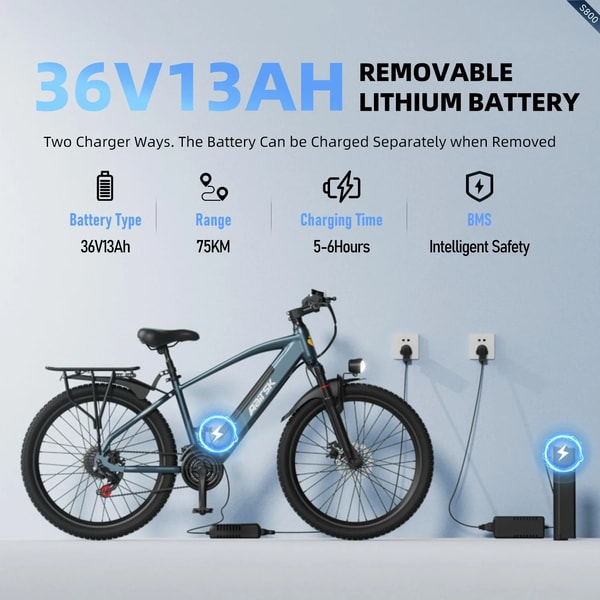
How to Extend Your E-Bike Battery Life
Most of us don’t think much about our battery until it starts running out of range too quickly during a ride.
Whether you ride an electric fatbike like the Vomo X50, Aairsk X5, or V8 Max, or a high-performance electric bike like the ENGWE L20 3.0 Boost, or ENGWE EP-2 Pro, high-quality lithium-ion batteries naturally lose some of their total capacity over time. However, the way you charge, store, and ride with your electric bike or fatbike battery makes a massive difference in how many years it stays in top condition.
The good news? You don’t need to be an engineer to double your battery’s lifespan. Here are the simple habits every electric bike owner should know.
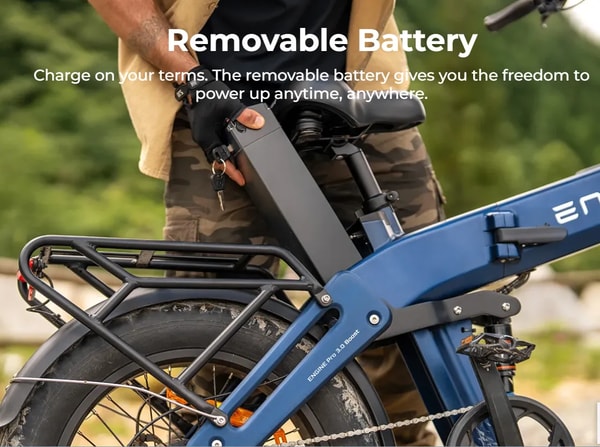
1. You Don’t Always Need to Charge to 100%
One of the simplest things you can do is avoid charging your battery to 100% every single time.
It might seem logical that a battery is happiest when it is completely full. In reality, lithium-ion battery cells experience the most chemical stress when they spend long periods sitting at a maximum charge level.
Research and real-world battery testing show that partial charging cycles significantly increase a battery’s total service life. Going from 0% to 100% every day puts far more wear on the cells than charging in smaller increments.
- Heavy stress cycle: 0% → 100%
- Gentle daily cycle: 20% → 80%
If you only need enough power for short daily commutes or quick errands around town, unplugging around 80% is ideal.
Pro Tip: Don’t stress about following this rule to perfection. If you’re planning a long weekend trip on your Aairsk GT900 or need maximum range on your Atlastrek V8 Max to get through your day, charge it to 100%. Having full battery capacity when you actually need it is far more important than protecting the battery at all costs.
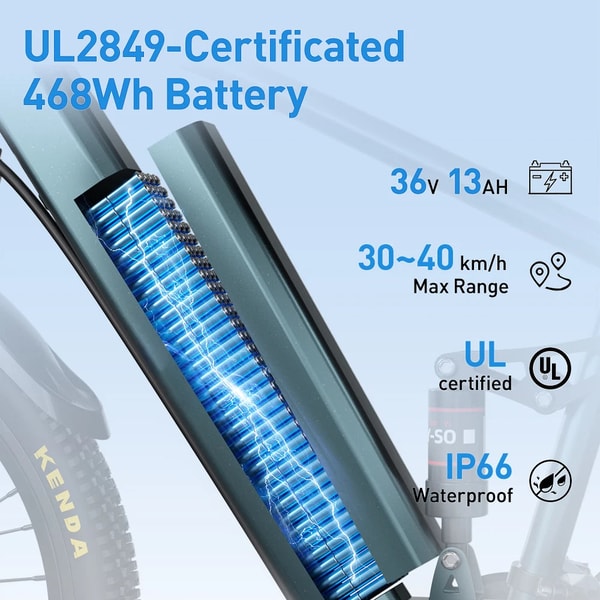
2. Don’t Wait Until the Battery is Completely Empty
Another common habit is waiting until your electric bike’s display shows 0% before plugging in the charger.
For modern lithium-ion batteries powering e-bikes and electric fatbikes, this is actually harmful. Older battery types (like nickel-cadmium) had a “memory effect” and needed full discharges, but lithium-ion batteries thrive on partial discharges. Smaller, frequent top-ups allow the battery to survive through significantly more total lifetime charging cycles.
If you finish a ride on your Vomo X50 or Aairsk Q7 and your battery is at 40%, go ahead and plug it in when you have a charger nearby. You never need to force your battery down to 5% or 0%.
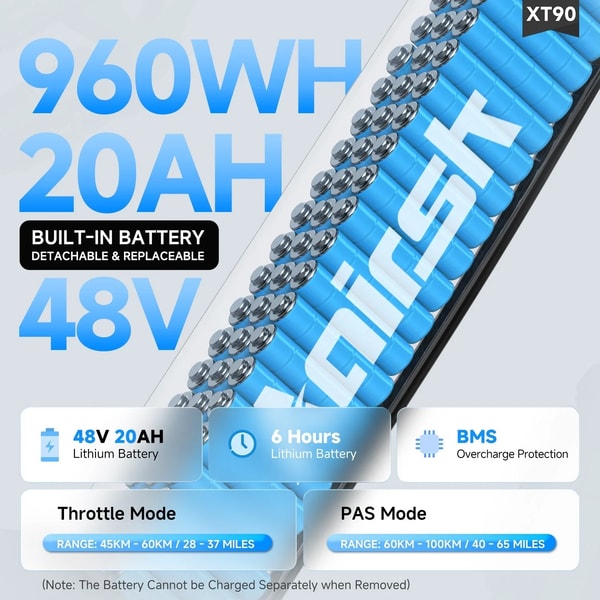
3. Think of Your Battery Like a Rubber Band
A simple way to picture battery stress is to imagine a rubber band:
- If you constantly stretch a rubber band to its absolute limit (100% charge) or stretch it completely flat (0%), it loses its elasticity faster.
- If you use it gently in the middle range, it lasts for years.
Keeping your battery operating somewhere in the middle of its capacity (20% to 80%) during regular use minimizes mechanical stress on the lithium cells.
4. Heat and Cold Are Your Battery’s Biggest Enemies
Charging habits matter, but temperature control has an even bigger impact on long-term capacity. Extreme heat combined with a 100% full battery is the single fastest way to degrade battery health on electric bikes and fatbikes.
To protect your battery from temperature damage:
- Avoid Direct Sun: Never leave your battery, e-bike, or electric fatbike sitting in direct sunlight on a hot day while charging.
- Avoid Hot Enclosures: Don’t store your battery inside a hot car, unventilated shed, or near heaters.
- Winter Care: During cold winter months, store and charge your battery indoors at room temperature (15–20°C). Never charge a battery that is frozen or near 0°C—let it warm up inside first.
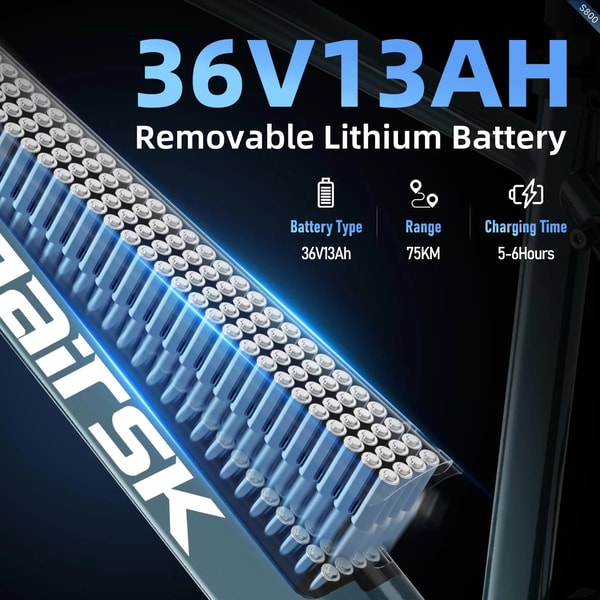
5. What to Do During Off-Season Storage
If you put your electric bike or fatbike away for a few weeks or during the wet winter months:
- Do not store it at 100%: Leaving a battery full while sitting idle for months causes capacity degradation.
- Do not store it at 0%: If a battery sits completely empty, its internal self-discharge can cause it to drop into a deep-discharge state, rendering it unchargeable.
- The Storage Sweet Spot: Charge or discharge your battery to around 50% to 60% before putting it away, and check on it once every month.
A Few Simple Rules to Remember
If you want to keep things effortless, just remember these core habits:
- Avoid regular 0% drains: Top up your battery before it gets completely empty.
- Use the 20–80% zone for short trips: Save 100% full charges for long weekend rides.
- Protect it from extreme temperatures: Store and charge your battery indoors during winter.
- Don’t overthink it: Modern electric bike and fatbike batteries are built to be used. Enjoy your rides and use your full battery range whenever you need it!
Looking for a replacement battery, an electric fatbike, or an upgrade to a long-range e-bike? Explore our complete collection of models—including the Vomo X50, Aairsk X5, Atlastrek V8 Max, Aairsk GT900, Aairsk Q7, ENGWE L20 3.0 Boost, ENGWE EP-2 Pro—at Getzze.
Source: Battery University, “BU-808: How to Prolong Lithium-based Batteries.”